

Have you ever heard the saying: “Trauma is stored in the body”? It means that sometimes, the effects of trauma don’t only linger as memories. You may know logically that you’re safe now, but your body can still react as if the danger is happening all over again. Even if you’re not consciously thinking about what happened, your body might still be carrying the physical and emotional effects.
As much as we wish there was, there isn’t one magic stretch or tool that will help you release all of the stored trauma. Releasing trauma stored in the body is usually more about intentionally, one step at a time, helping your nervous system learn that the danger has passed.
What does it mean when they say trauma is stored in the body?
First, let’s go over exactly what it means when people talk about trauma getting “stored” or “trapped” in your body.
It doesn’t mean that a physical object or memory literally gets “stuck” in your tissues or organs. Of course, if your trauma caused physical injuries, then you could still be living with the aftermath of that. But the relationship between trauma and your body goes beyond injury.
Basically, it means that your mind and body continue to carry the effects of the trauma, even after the scary events have passed.
Nervous system and stress response
Trauma changes your entire nervous system. When you’re going through trauma — which, by definition, is an event that’s so scary and upsetting that it surpasses your ability to handle it — your body goes into a state of fight, flight, or freeze.
This is called the stress response. When your brain senses danger, it sends signals throughout your body to help you survive. Your heart rate may increase and your breathing may change. Your muscles can tense as your attention becomes focused on the threat.
Usually, your body begins to settle again when the danger passes. But bodies who have experienced trauma have a harder time returning to baseline.
Dealing with stored trauma means that even years after the actual traumatic events have passed, your nervous system can physically stay in this state. It’s learned it can never relax. It needs to stay on guard to keep you safe. Even if you relax sometimes, the moment something reminds you of the trauma — whether you’re actually in danger now or not — your body jumps back into survival mode. This can happen especially if you went through long-term or complex trauma, like childhood abuse.
Your brain and memory
Experiencing trauma also affects the way your brain stores and processes memories.
When you’re under extreme stress, the brain systems involved in fear and memory are working differently than they usually do. The amygdala is involved in detecting threats. The hippocampus helps put memories into context, including when and where something happened. Under trauma, all of these systems stop working like they’re supposed to.
This may help explain why reminders of the trauma can sometimes create such an intense and immediate reaction. A smell, sound, or physical sensation could remind your brain of what happened before you’ve even consciously made the connection. You might not even be able to remember a lot of the details of the trauma, or remember them in the “wrong” chronological order.
Muscle tension
Stored trauma can cause chronic muscle tension. Tensing up your muscles is one way your body tries to protect you from threats. In fact, muscle tension is a normal part of the body’s stress response.
But when your body feels like it needs to stay prepared for danger, your muscles may stay braced longer than you realize. That can contribute to soreness or tension headaches. Some people also notice jaw pain or a constant urge to stretch.
This isn’t specific to one muscle group. You might have heard that “trauma gets stored in the hips.” That’s partly because your hips contain the psoas muscle, which tends to get tight under long-term stress. You might also literally contract your core without realizing you’re doing it.
But you can experience tension in any muscle because of stored trauma, not just your hips. Some people find that their trauma is stored in their shoulders, jaw, back, neck, and more.
Exercises to release trauma stored in the body
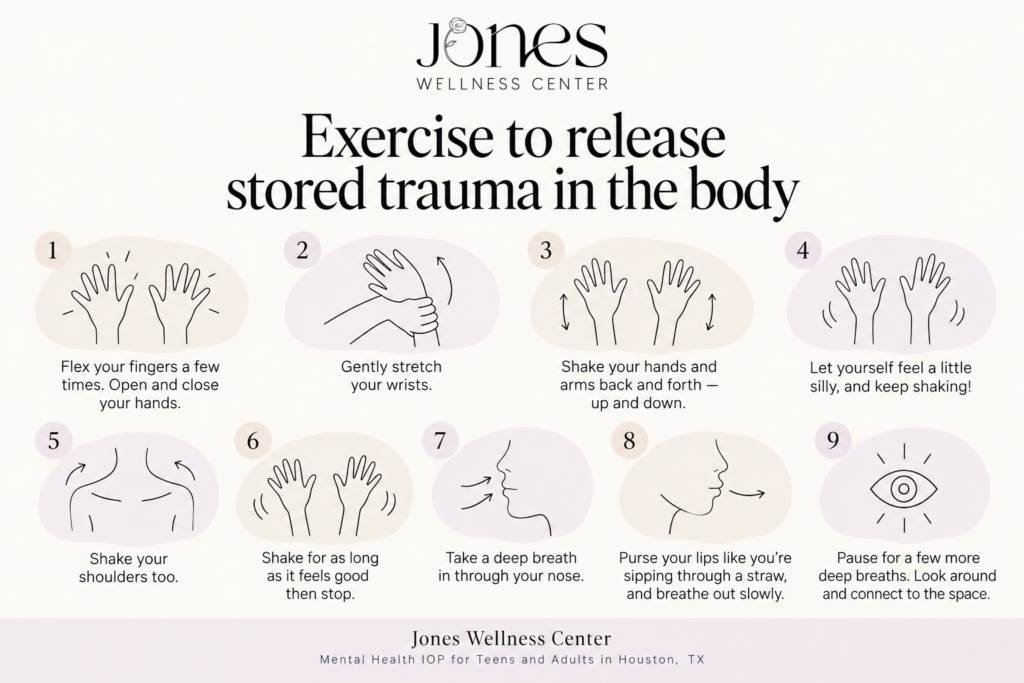
It’s absolutely possible to release stored trauma, especially with the right support. Even if it’s been a long time since you went through the trauma — even if it feels like your body has carried this for many years, even your entire life — there are ways to address it.
Unfortunately, healing from trauma is often not a matter of just doing a few exercises and letting it go. It can often take time, along with professional trauma treatment. But there are exercises you can do to regularly reconnect with your body and remember to get out of fight-or-flight mode.
At our mental health IOP, we start every session with nervous system regulation, including somatic therapy techniques. Here are some of the exercises we use to help release tension and trauma in the body.
Safety scan
Before you ask your body to relax, take a moment to notice if you’re safe right now.
Slowly look around the room. Instead of staying focused on what’s happening inside of your body, try to pay attention to what’s around you. Notice a few details that tell you where you are and remind you that you’re in the present moment, not back in the trauma. Practice body awareness, and notice places where you feel safe and calm.
You don’t need to force yourself to feel safe. For some trauma survivors, that can feel impossible at first. Instead, see if you can find something that feels neutral or okay.
Deep belly breathing
Intentional breathwork, like deepening and lengthening your breath, can physically calm down your body’s stress response.
Place one hand over your stomach. Instead of trying to take the biggest breath possible, breathe slowly and gently enough that you can feel your belly move underneath your hand. You can also try making your exhale a little longer than your inhale. Take your time and don’t force it.
Breathing exercises aren’t comfortable for everyone, especially if focusing on your breath makes you feel trapped or more anxious. If you notice yourself feeling worse, you can stop and try one of the other exercises instead.
Hand shaking stretch
Trauma can cause you to clench your hands or hold tension there without even realizing it.
Stretch your arms out in front of you and spread your fingers as wide as feels comfortable.
Then, gently shake out your hands and wrists, almost like you’re shaking water off of them. It might feel a little silly at first, but keep shaking.
Keep going for as long as it feels good.
Self-hug
Cross your arms over your chest so that each hand rests on the opposite upper arm. Give yourself enough pressure that it feels supportive, but not uncomfortable. Slowly rub your hands up and down your upper arms. Try focusing on the warmth and pressure of your hands against your skin.
For some people, this type of self-touch feels comforting. For others, it doesn’t. You never need to force yourself through a body-based exercise that makes you feel uncomfortable.
Signs your body needs a trauma release

Part of the saying “trauma is stored in the body” means that even if you feel, consciously, like you’ve gotten “over” what happened, your nervous system may still be carrying it. You may not consciously be thinking about the trauma. When you do, it might not bring up any big feelings for you. But sometimes (not always), it could still be stored in your body.
Your body could be needing a trauma release if:
- You have frequent unexplained headaches
- You clench your jaw or grind your teeth.
- Your shoulders, neck, or back almost always feel tight.
- You deal with chronic pain that isn’t explained by other medical issues.
- You have a hard time sleeping even when you feel exhausted.
- You’re easily startled or feel like you always need to know what’s happening around you.
- You feel numb or disconnected from parts of your body.
- Your body seems to freeze or shut down when you get overwhelmed.
- You frequently notice physical tension without knowing why.
- You have a hard time getting comfortable when you try to rest.
- Certain reminders cause an intense physical reaction even when you know you’re safe.
Trauma-Informed Mental Health IOP in Houston, TX
If you’ve been through trauma, your body learned to stay on guard because, at some point, that helped you survive. But you don’t need to stay stuck in survival mode forever. You deserve to release both the memories and the physical effects of trauma.
Trauma treatment can help you understand the physical reactions you may still be having due to stored trauma, and practice nervous system regulation in ways that feel safe and manageable for you.
Our trauma-informed mental health IOP in Houston gives you a supportive space to do this important work with professional guidance. We incorporate nervous system regulation into our sessions and understand that emotional healing needs to happen at your pace. We have IOP programming for both teens and adults dealing with issues like PTSD, depression, and anxiety.
Contact us to learn more about our Houston mental health IOP and see if it could be a good fit for you or your teen.